Le Nymphée – Auvers-sur-Oise
by Abdon FLORES
Ancient French castles are singular monuments in rural France, an expresion of the rich culture and deep traditions this country has. All over the territory there are many exemples of these magnificent buildings, being Versailles and Fontainebleau probably the most famous ones. But near Paris there are other less known châteaux, brilliant exemples of a golden epoch.
The nearby town of Auvers-sur-Oise is well known due to its key role in the history of impressionist painting. For instance, it was here where Vincent van Gogh spent his last days, and where many of his most famous paintings were executed. In this small town there are anonimous places like his doctor’s house or even van Gogh’s last dwelling. A dreamlike site chosen by impressionist painters, having a priviliged natural ambiance and a rather well preserved castle that serves today as a museum about impressionism.


The Château d’Auvers – Vision Impressionniste, has a state of the art concept regarding museology. Its multimedia itinerary on the impressionist subject illustrates in a convincing way the history of this revolutionary artistic stream. A remarkable French garden with a view over the town adds some poetry to the complex. But what shines in this castle is somewhat hidden, a peculiar niche called nymphée, a garden ornament fashionable during the XVI and XVII centuries. The one in Auvers is particularly well preserved, its walls fully covered with seashells, stones and glass fragments.
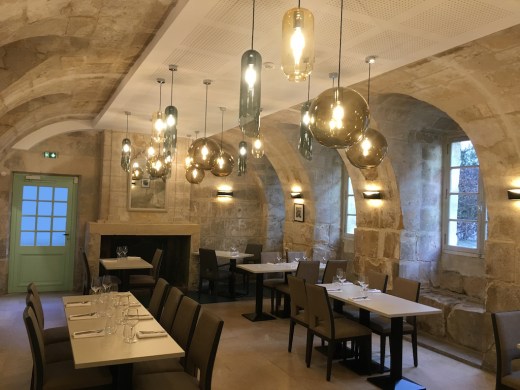
These constructions were devoted to the nymphs, those mythical creatures associated with water and nature. The construction in the castle is in such a good condition and in a quite strategic location that it was the perfect excuse to build around it a visitors restaurant. This is briefly the non official history of Le Nymphée, the gastronomic secret of the castle built in the Orangerie and the former Atelier.
As many other rural French restaurants, in Le Nymphée local products are privileged as well as home made dishes. Poultry, fresh vegetables, fruits and sustainable agriculture processes are preferred. Chef Cédric Barbet is in charge of the kitchen. Needless to say that his background is strong: in Caen with Michel Bruneau; at Plaza Athénée with Alain Ducasse and most recently with Yannick Alléno at Pavillon Ledoyen. In his own words, chef Barbet states that: «I have a preference for vegetables; with all the land we have in Auvers this is a logical choice. But also I like fish; being myself a Normand, that’s also consequent. »
According to chef Barbet, the menu will change every 4 to 6 weeks, always following the seasonal periods and trying to match the museum’s main subject. If impressionist cuisine might be a rampant concept the menu already offers a good palette of dishes. Cod ceviche with coconut milk is a very eloquent entry while grilled striped bass, green curry mousse, thin leek and coconut rice makes a statement regarding chef Barbet origins.
The former Ducasse and Alleno apprentice aims high since in his mind there is a great potential for the business. “The objective in the middle term is to gain one Michelin star. The museum’s director and I are really committed to get there.” Well located and furnished, the restaurant has a capacity of 70 places, it can be privatized, and is open from Tuesday to Sunday for the meals, and Fridays and Saturdays for diner. Seasonal closure goes from 15th December till 15th January.