Mark Twain last Typewriter
The love-hate relationship Mark Twain (whose real name was Samuel Clemens) had with typewriters is well documented. The author known best for his stories about Tom Sawyer and Huckleberry Finn soured on the devices —he acquired his first in 1874— that were, according to Twain, “full of caprices, full of defects —devilish ones.”
He was so firm in his dislike for typewriters that he took his disdain a step further in a letter to the Remington Company on March 10, 1875, shortly after they began marketing the device, steadfastly refusing to lend his name to a testimonial.
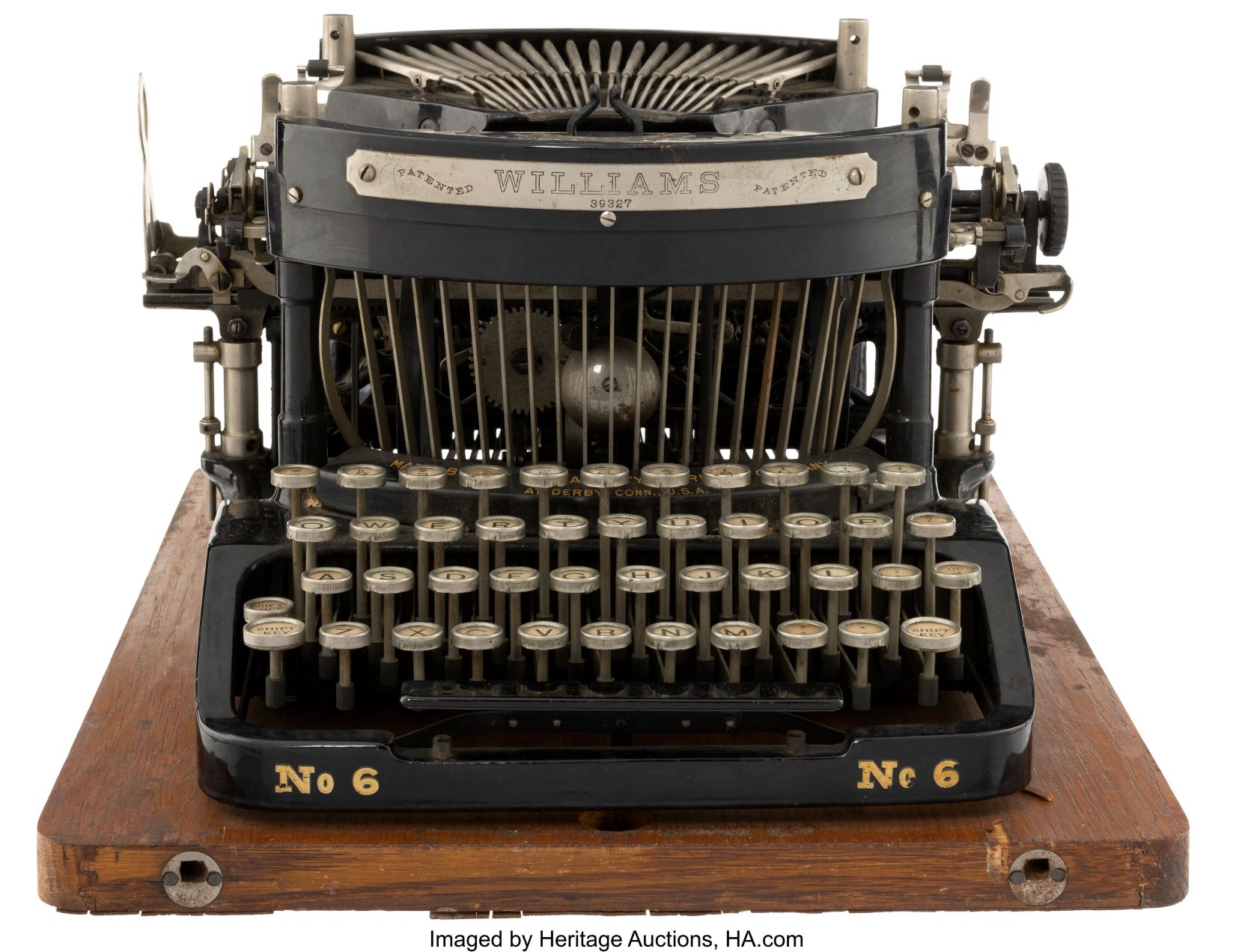
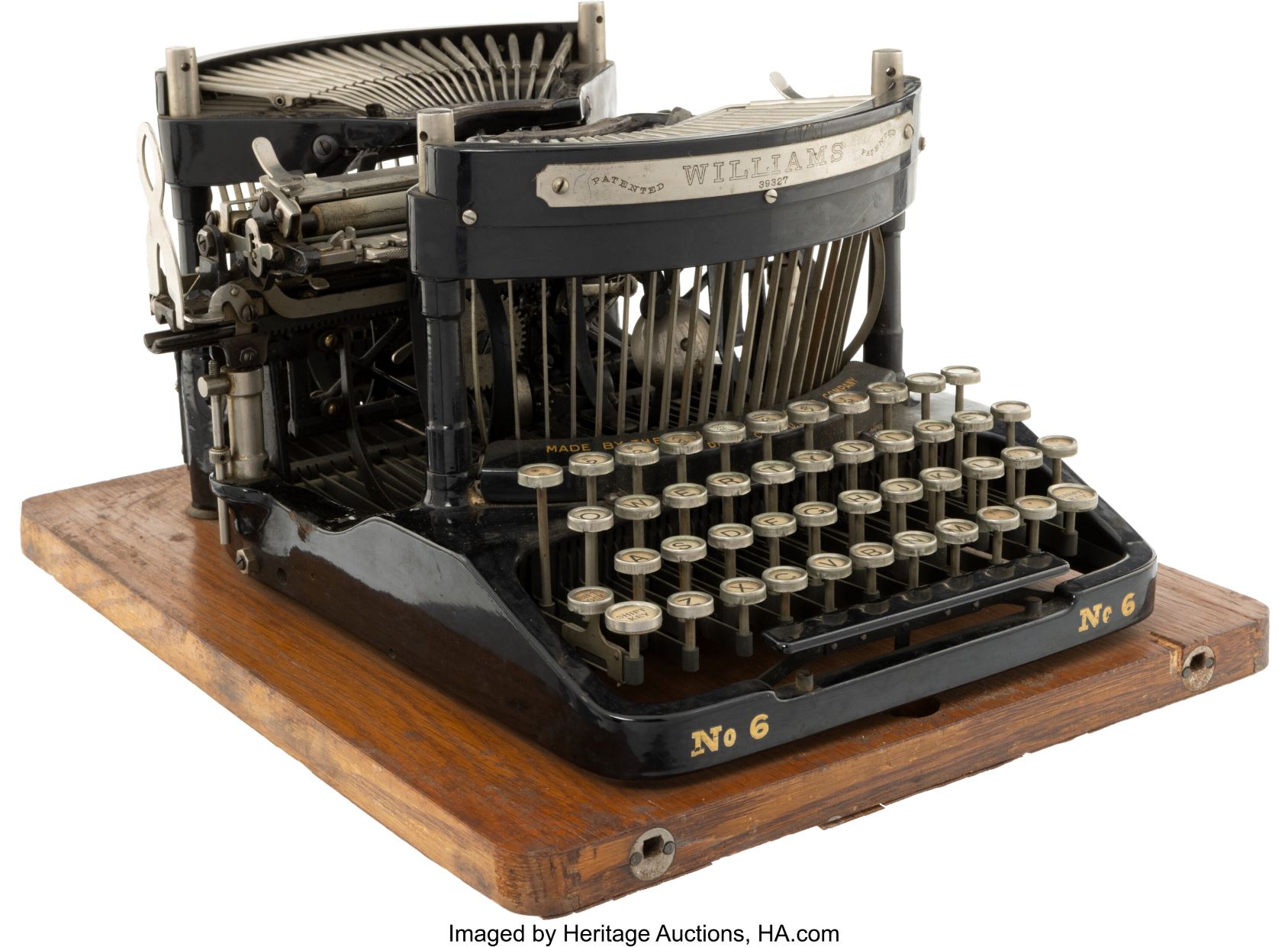
But the fact is that the beloved author did own typewriters, one of which will come to auction for the first time in the upcoming Heritage Auctions event. Twain’s Personally Owned Williams No. 6 Typewriter, has become one of the most remarkable American literary relics of the 20th century.

“Mark Twain’s dislike for typewriters is well documented, but he was one of the first authors to own one and eventually warmed up to them,” says Sandra Palomino, Director of Historical Manuscripts at Heritage Auctions. “In 1883, he became one of the first authors to type a manuscript when he delivered a typed copy of Life on the Mississippi to his publisher.”
Toward the end of his life, Twain purchased this beautiful and impeccably provenanced Williams No. 6 “grasshopper” typewriter, which he owned from 1908 until his death in 1910. The company produced it from 1904 to 1909, but the serial number on this example dates its manufacture to 1908; the Twains moved to Stormfield, his beloved mansion in Redding, Connecticut, in the spring of that year. This model also marked a significant improvement from the earliest machines, because its design allowed the typist to view text as it was written thanks to the “grasshopper” mechanism that pushed the typebar up as the key was struck.
This remarkable relic was given by Twain’s daughter, Clara, to Harry B. Iles, the Superintendent and Groundskeeper at Stormfield, to thank Iles for his years of service. It remained in the Iles family until it was sold in 1982, and again in 1990 to the consignor, a close friend of Iles’ son, Harry.
Provenance documentation accompanying the item includes the 1982 purchase receipt signed by Harold Page, Harry B. Iles’ great-grandson, and a signed and notarized statement of provenance from the current consignor, which details the 1990 purchase as well as their decades-long relationship with the Iles family.